Showing posts with label Veterans day. Show all posts

Thursday, August 6, 2009

A Brief History of Camp Lockett

A Brief History
by
Trooper Fred D. Jones - 28th Cavalry Troop C
WWII Buffalo Soldier

Camp Lockett's site was chosen for a cavalry camp as far back as 1878 when sixteen troopers wearing the blue uniform of The US Cavalry bivouacked for several months in this small Mexican border valley. At that time it took a week to get to San Diego, the choicest acres of bottom land sold for $5 an acre, smugglers and belligerent, "Indians" were problems.

"E" Troop of the 11th Cavalry Regiment was stationed here in 1918 and since then therehave been a succession of home soldiers stationed at this strategic junction where road and rail road return to the United States after dipping into Baja California en route from San Diego to Yuma.

Ground was broken for the present camp on June 23rd 1941. The 11th Cavalry Regiment came there two days after the bombing of Pearl Harbor. Camp Lockett is a horse cavalry camp. The surrounding terrain offers unparalleled opportunities to test man, beast and mechanized carriers over a wide variety of terrain that includes heavily wooded underbrush, desert sand, miles of barren, rocky wastelands, Streams to be forded, and other geographic hazards identical to those which confront cavalry troopers in battle conditions.

Climatically this is a region of extremes. There is summer heat of 115 degrees; freezing temperature in winter. Long dry spells alternate with cloudbursts.
2d Cavalry Division Shoulder Sleeve Insignia

Some of the buildings were built as permanent cantonments while others were semi-permanent. The semi-permanent buildings no longer exist. There was a well equipped hospital which is now used as a youth facility. There are still standing many of the permanent barracks and some stables.

In 1942, the 10th Cavalry Regiment (the famed Buffalo Soldiers) moved into Camp Lockett to replace the11th Cavalry Regiment which had been converted into an armored unit. In 1943 The 28th Cavalry Regiment made up of inductees joined the 10th to form the 4th Cavalry Brigade of the 2nd Cavalry Division (Horse)

At the same time The 27th Cavalry Regiment, also made up of inductees, joined the 9th Cavalry Regiment to form the 5th Cavalry Brigade. This brigade was stationed in Fort Clark, Texas. Their duty was to guard the Texas-Mexican Border. While the 10th and 28th guarded the California-Mexican Border. These troopers also guarded the many installations along the border such as, trestles, bridges, dams, railroad tunnels and would be the first line of defense in case Germany or Japan attempted an invasion of the United States through Mexico.

In 1944 The 9th, 10th, 27th and 28th were dismounted and sent to North Africa. Soon after their arrival there all four regiments were inactivated and converted into service troops. This marked the end of the horse cavalry in the United States Army. The 28th, through an error was not officially inactivated until 1951.This makes Camp Lockett the last home of the last horse cavalry in the US Army.

Note: Information obtained from The California State Military Museum

Thursday, February 22, 2007

NAACP CELEBRATES THE LIFE OF DR. WILLIAM HENRY WADDELL IV

Source: HTTP://WWW.NAACP.ORG/NEWS/PRESS/2007-02-09/INDEX.HTML

Feb. 9, 2007

Dr. William Henry Waddell IV

The NAACP celebrates the life of Dr. William Henry Waddell IV, the nation’s second-oldest known Buffalo Soldier, a pioneer in the field of veterinary medicine and a lifetime NAACP member. He died January 30 in Hawaii at the age of 98.

A man of many “firsts,” Waddell was born in South Richmond, Va. in 1908. He studied veterinary medicine at Lincoln University and passed the Pennsylvania State Board of Veterinary Medicine in 1935, becoming the first licensed black veterinarian in the state. Waddell later co-founded the Tuskegee Institute School of Veterinary Medicine, where he served as the school’s first faculty member and worked with George Washington Carver on peanut oil therapy. Waddell was also the first black member of the American Veterinary Medicine Association and the first black veterinarian to practice in West Virginia.

From 1941 to 1946 Waddell served the U.S. 9th and 10th Cavalry Regiments of the United States Army as a Buffalo Soldier. The Buffalo Soldiers were originally established by Congress as the first peacetime all-black regiments in the United States Army, but later operated during wartime. Waddell served abroad during the Italian campaign of World War II and was later wounded in action in North Africa.
Waddell was the second oldest of two surviving Buffalo Soldiers, and the last member of the 9th and 10th Calvary Regiments. He continued to attend Buffalo Soldier reunions each year up until his death. Joe Barnes of San Francisco is said to be the oldest known and sole remaining Buffalo Soldier.

After the war, Waddell opened a veterinary clinic in Tuskegee, Ala. and continued his affiliation with Tuskegee University. He was honored for his contributions to the veterinary school in 2004.

Among his many honors, Waddell received an honorary Doctor of Science degree from Lincoln University and a lifetime achievement award at the National Veterinary Association meeting in Honolulu last year. An annual scholarship named in his honor was recently instituted by the NAACP Honolulu Branch.
Waddell is remembered as a wise and exceptionally kind man who encouraged youth to seek knowledge and education. He is survived by a host of loving relatives and family friends and will be sorely missed.

Founded in 1909, the NAACP is the nation's oldest and largest civil rights organization. Its members throughout the United States and the world are the premier advocates for civil rights in their communities, conducting voter mobilization and monitoring equal opportunity in the public and private sectors.

Wednesday, February 21, 2007

1908-2007 William Waddell, Buffalo Soldier

By Will Hoover, Advertiser Staff Writer

William Henry Waddell — one of only two surviving Buffalo Soldiers — died at age 98 Tuesday evening at his home in Ka'a'awa.

Waddell, who retired in Hawai'i in 1972 with his wife Lottie, served from 1941 through 1946 with the 9th and 10th Cavalry during the Italian campaign of World War II.

The term "Buffalo Soldier" is one of pride that harks back to the period immediately following the Civil War when depleted Union troops were, by act of Congress, strengthened for the first time to include six regiments of black soldiers.

The term became synonymous with all black regiments that served during subsequent conflicts including the Spanish American War, World War I, World War II and the Korean War, after which the unit was discontinued.

But Waddell had been a trailblazer before entering the war. In 1935, he made history by becoming the first black to be granted a license to practice veterinary medicine in Pennsylvania after he passed the State Board of Veterinary Medicine.

Waddell, who was born in South Richmond, Va., in 1908, also was the first black to practice veterinary medicine in West Virginia and the first black member of the American Veterinary Medicine Association. He was further honored in 2003 as a co-founder of the historic Tuskegee Institute School of Veterinary Medicine.

"I think he was a great humanitarian," said his daughter Kathryn Waddell Takara, a professor at the University of Hawai'i at Manoa. "He had a kind heart.

"He was a terribly hard worker who came up from nothing. He's my hero."

In 2004 ,Waddell was awarded a doctor of science honorary degree from the Lincoln University in Pennsylvania.

Through it all, Waddell remained a man of warmth and humor. His autobiography, "People are the Funniest Animals," was published in 1978. He also authored several other books.

"He was a grand, grand man," said retired UH professor Miles Jackson, a neighbor of Waddell's. "We all looked upon him as a sage. He had always had positive words of wisdom to share with people.

"He had a fantastic memory. We really enjoyed his company."

To those who knew him, he was an inspiration who will be greatly missed.

"The sad state of affairs is that we began February, Black History Month, with the loss of a national treasure," said Alphonso Braggs, president of Hawai'i NAACP.

"He's the reason that many of us are able to pursue our goals, our dreams and our aspirations. And right up to the end, he was still being that inspirational leader and mentor that he is very well known for.

"The irony is that at this time last year, Dr. Waddell was going around the Island bases with us celebrating Black History Month. So there's going to be that absence this year."

Yet, Braggs and Jackson both praised Waddell for giving those who follow in his footsteps the courage and motivation to continue to carry the message of inspiration and hope forward.
"We can only hope that we are able to live long enough to leave a legacy as great as what he's left us," Braggs said.

At a time when many young people are having trouble understanding the civil rights struggles of the '50s and '60s, he said Waddell's legacy stands as a beacon of light.

Already that legacy has grown. On Jan. 13 — less than a month before his death — the Honolulu Hawai'i branch of the NAACP awarded its first scholarship in Waddell's name, Braggs said.

"We really want to perpetuate what he has done. And that's one way to remind folks," Braggs said.

His wife preceded him in death. Aside from his daughter, survivors include two grandchildren and two great-grandchildren.

Photo from the Buffalo Soldier Research Museum
http://buffalosoldiersresearchmuseum.org/research/books/waddell.htm

This article was published on February 4, 2007

Tuesday, November 21, 2006

Recent 2006 Veterans Day Buffalo Soldier Public Appearances

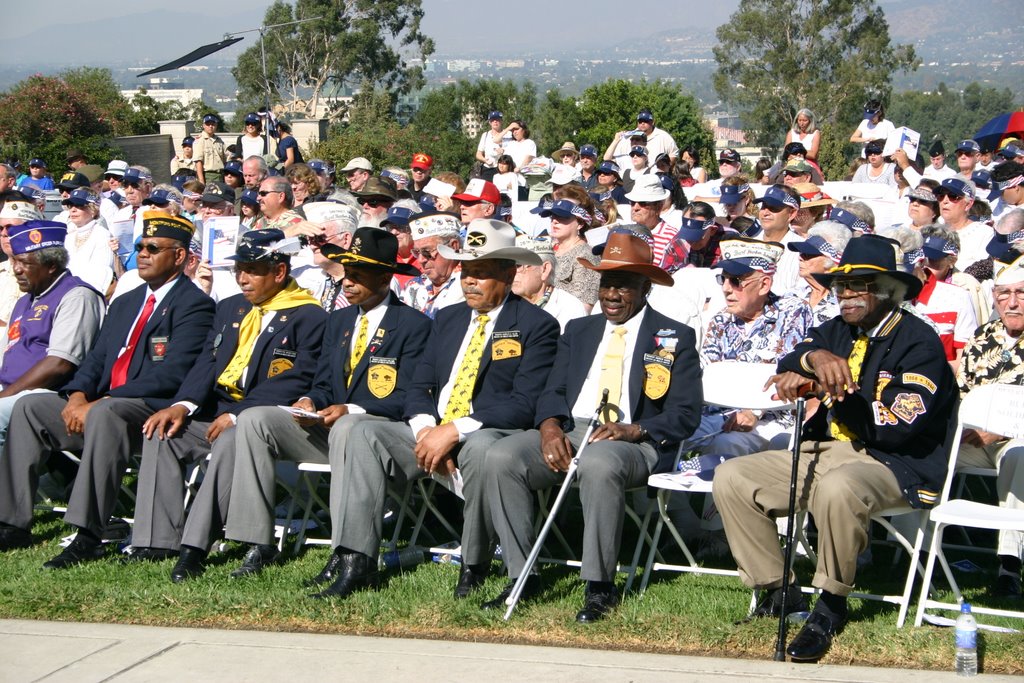
Hollywood Forest Lawn 2006 Veterans Day Program. Seated from left to right are: Trooper Phil Wilkes Fixico, Trooper Lennister Williams, Trooper Charles Allen, Trooper Andrew Aaron and 90 year old, Trooper Robert McDaniel.

Trooper Andrew Aaron (24th Infantry - Korean War vetran) is interviewed by a local news station.

Trooper Lennister Williams with local Los Angeles News Anchor, Stan Chambers, who was this years Master of Ceremony for the Veterans Day program.

Trooper Robert McDaniel (9th Cavalry WWII veteran) with Stan Chambers

Los Angeles Chapter 9th and 10th (Horse) Cavalry Association members with local area scouts and scout leaders

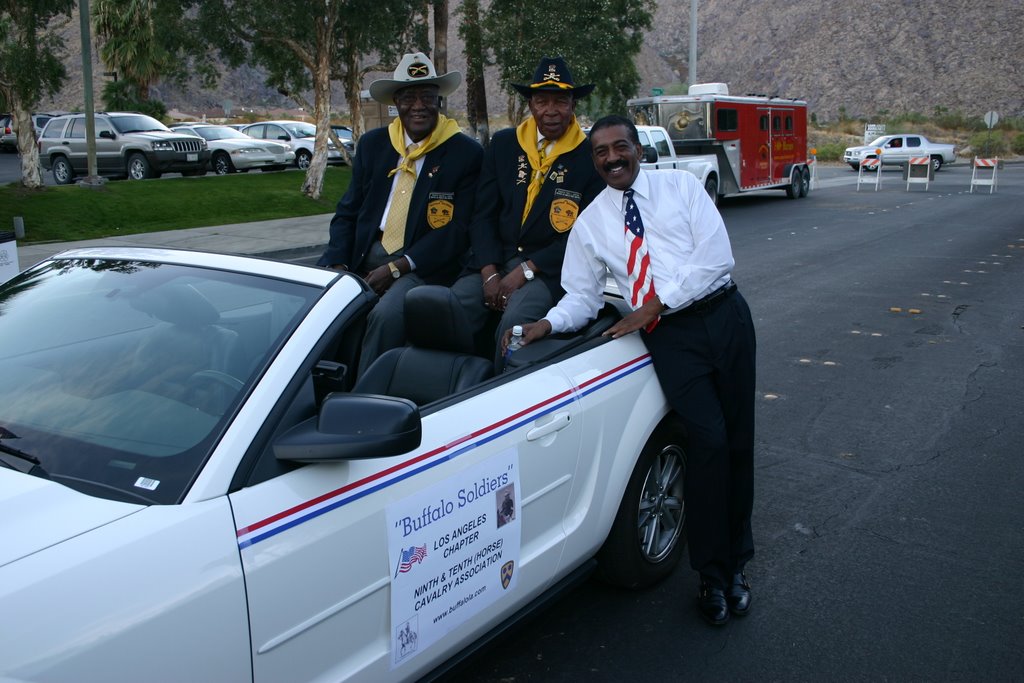
Trooper Andrew Isaacs and Trooper Fred Cartha (both 10th Cavalry - WWII veterans) with the Mayor of Palm Springs, Ron Oden just before the start of the Palm Springs Veterans Day parade.

Trooper Fred Cartha with the mounted unit from Ft Irwin

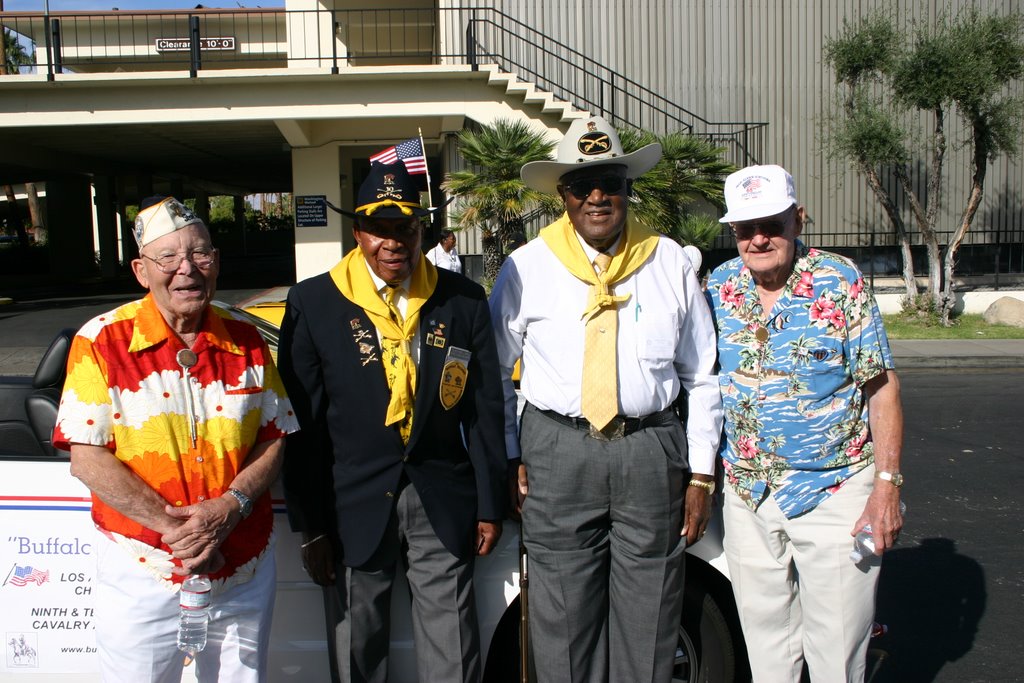
Troopers Carth and Isaacs with Pearl Harbor survivors

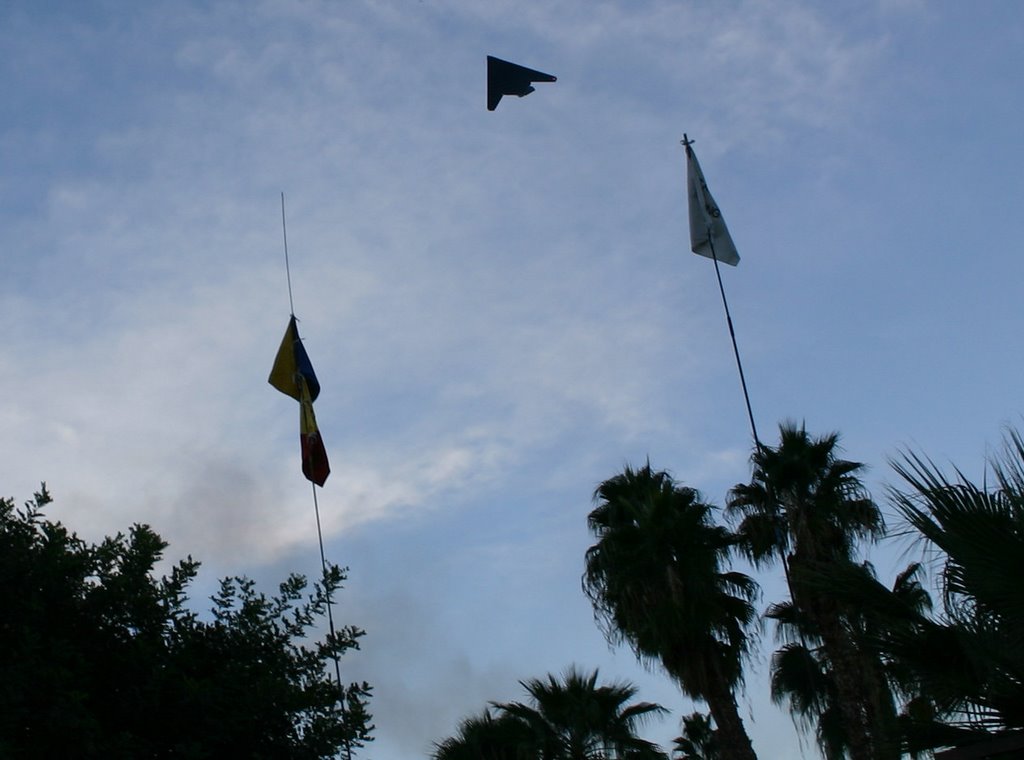
Spectators at the Palm Springs Veterans Day parade were treated by a flyover of a F-17 Night Hawk stealth fighter.

Looking down the parade route in Palm Springs just before the start of the parade.

Monday, November 20, 2006

89 Year Old WWII Buffalo Soldier Willie Jones Prepares to Retire Again

Photo By: Lui Kit Wong/The News Tribune
William Jones, better known as Mr. Jones, spent 22 years in the Army as a Buffalo Soldier before retiring as a master sergeant. After 54 years in Tacoma as the man who has everything, he’s ready to retire again.

I came across an article on Mr. Jones while doing some research on the Buffalo Soldiers. In the article a phone number was listed so I called it. What a pleasant surprise it was when I heard a voice answer, "Mr. Jones!" After I explained that my name was Jones too, and that I am a member of the 9th 10th (Horse) Cavalry Association in Los Angeles, I spent a very pleasant time talking with Mr. Jones and his daughter Lia.

Mr. Jones is looking forward to retiring, but he'll keep busy with his 9th and 10th (Horse) Cavalry Museum. He has one of the country's largest collection of out of print books about the Buffalo Soldiers.

Mr. Jones served in the 10th Cavalry at Camp Lockett and possible knew my father along with Trooper George Poston (deceased) and our current Chapter PresidentTrooper Eugene Lewis.

To find out more about Trooper Willie Jones click on this link:

Buffalo Soldier National Museum Acquires Historic Colletion

The Buffalo Soldier Museum in Houston, Texas recently received a substantial donation of military uniforms, weapons, pictures and diaries that tells the story of black soldiers from the end of the Civil War to World War I. The collection belonged to Anthony Powell, a historian who lives in California's Bay Area. Mr. Powell packed up his collection and drove a Budget rental truck 2,000 miles to deliver 13 crates of military memorabilia to the Buffalo Soldier National Museum.

Pictured here is Trooper PJ Matthews, the museum curator.

For more information about Mr. Powell's donation click on this link:

...pray for our soldiers who live In Harm’s Way!

As we move into the Holiday Season, I would like to change the subject from all things Buffalo Soldiers, to our men and women now serving in the arm forces around the world. A couple of years ago I came across a poem that was written by a Marine stationed in Japan. Unfortunately I do not know his name for I would like to acknowledge him and the message it reflects.

I am not too proud to say that it brings a tear to my eye every time I read it.

Twas the night before Christmas...

‘Twas the night before Christmas, he lived all alone, in a one bedroom house made of plaster and stone. I had come down the chimney with presents to give, and to see just who in this home did live. I looked all about, a strange sight I did see, no tinsel, no presents, not even a tree. No stocking by the mantle, just boots filled with sand, on the wall hung many pictures of distance lands. With medals and badges, awards of all kinds, a sober thought came through, from the depths of my mind. For this house was different, it was dark and dreary; I found the home of a soldier, once I could see clearly. The soldier lay sleeping, silent, alone, curled up on the floor in this one bedroom home. The face was so gentle, the room in such disorder, not how I pictured a home for a United States Soldier. Was this the hero of whom I’d just read? Curled up on a poncho, the floor for a bed? I realized the families that I saw this night, owed their lives to these soldiers who were willing to fight. Soon round the world the children would play, and grown-ups would celebrate a bright Christmas Day. They all enjoyed freedom each day of the year, because of the soldiers, like the one lying here. I couldn’t help wonder how many lay alone on a cold Christmas Eve in a land far from home. The very thought brought a tear to my eye, I dropped to my knees and started to cry. The soldier awakened and I heard a rough voice, “Santa don’t cry, this life is my choice; I fight for freedom, I don’t ask for more, my life is my God, my Country, my Corps.” The soldier rolled over and drifted to sleep, I couldn’t control it I continued to weep. I kept watch for hours, so silent and still and we both shivered from the cold night’s chill. I didn’t want to leave on that cold, dark, night, this guardian of honor so willing to fight. Then the soldier rolled over, with a voice soft and pure, whispered, “Carry on Santa, it’s Christmas Day, all is secure.” One look at my watch, and I knew he was right. “Merry Christmas my friend, and to all a good night.”

The preceding was written by a Marine stationed in Okinawa Japan.

The Freedoms we enjoy, they all seem so nice, but were purchased by soldiers who paid the ultimate price. Before you turn-in at the end of each day, please say a prayer for our soldiers who live In Harm’s Way!

Season’s Greetings and Happy Holidays to you and yours!

Trooper Ronald R Jones

Sunday, November 19, 2006

A reflection on July 28, 1866

During July of this year (2006) as our organization prepared to celebrate the 140th anniversary of the formation for the Buffalo Soldier rgiments, I found myself thinking that during the early weeks of the month of July, 140 years ago, Black men were very concerned about their future. For well over 200 years in this country Blacks were held in servitude. In that time the country had gone through a Revolution, created a nation, endured a Civil War and emancipated the slaves. Over 180,000 Black men fought in the Civil War, on both sides, and over 140,000 of them lived to see the end of the war and the freedom they all fought so hard for to achieve. But freedom is truly a relative term. Reconstruction, in the South, was progressing but with it came the Black Codes.

A Republican controlled Congress was concerned about the safety of their American citizens, or so they say, who were venturing out into the Western Territories. And so, an Act was drafted and presented to Congress on July 28th, 1866. It offered 6,000 Black men, some veterans of the Civil War, a chance to earn $13.00 a month. Sure there was training and education, room and board, three squares-a-day and a paymaster at the end of each month, and there was segregation, racism, prejudice, inferior equipment and terrible duty assignments. But there was also an intangible component associated with what the government was offering these Black men. Something that no one could predict or even ascertain the effect of …and that was an opportunity. Give a man, any man, self-determination. Let him feel he has some control of his destiny, let him feel he is free to decide his fate and determine his future; let him feel he is a Man, provide him an opportunity and then step back and watch great things happen . On July 28th, 1866 young Black men pondered their future, seized an opportunity and the rest, as they say, is history.

Trooper Ron Jones

23 Names Every Trooper Should Know!

The Bravest of the Brave

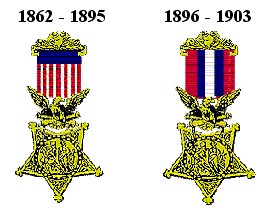
The Medal of Honor is the highest military decoration awarded by the United States. It is awarded "for conspicuous gallantry and intrepidity at the risk of life, above and beyond the call of duty, in actual combat against an armed enemy force." Since it was first awarded during the Civil War, the medal has been awarded 3,460 times, most recently in 2005. There were 23 Medal of Honor awarded to the Buffalo Soldiers during the Indian and the Spanish-American Wars.

9th Cavalry Medal of Honor Recipients

1. Sgt. Thomas Boyne – C Troop; Victorio Campaign, 1879
2. Pvt. John Denny – C Troop; Victorio Campaign, 1879
3. Cpl. Clinton Greaves – C Troop; Apache Campaign, 1877
4. Pvt. Henry Johnson – K Troop; Ute Campaign, 1879
5. Sgt. George Jordan – K Troop; Victorio Campaign, 1879
6. Sgt. Thomas Shaw – K Troop; Apache Campaign, 1881
7. Sgt. Emanuel Stance – F Troop; Texas, 1870
8. Sgt. Augustus Walley – E Troop; Apache Campaign, 1881
9. 1st Sgt. Moses Williams – I Troop; Apache Campaign, 1890
10. Cpl. William O. Wilson – I Troop; Pine Ridge Campaign, 1890
11. Sgt. Brent Woods – B Troop; Apache Campaign, 1881

10th Cavalry Medal of Honor Recipients

12. Sgt. Mjr. Edward L. Baker, Jr. – Spanish-American War, 1898
13. Pvt. Dennis Bell – H Troop; Spanish-American War, 1898
14. Pvt. Fitz Lee – M Troop; Spanish-American War, 1898
15. Sgt. William McBryar – K Troop; Apache Campaign, 1890
16. Cpl. William Tompkins – B Troop; Paymaster Escort, 1889
17. Pvt. George H. Wanton – M Troop; Spanish-American War 1898

24th Infantry Medal of Honor Recipients

18. Sgt. Benjamin Brown – C Troop; Paymaster Escort, 1889
19. Cpl. Isaiah Mays – B Troop; Paymaster Escort, 1889

Seminole Negro Indian Scouts Medal of Honor Recipients

20. Pvt. Pompey Factor – 24th Infantry; Staked Plans Expedition, 1875
21. Pvt. Adam Paine – 24th Infantry; Comanche Campaign, 1874
22. Trumpeter Isaac Payne – 24th Infantry; Staked Plans Expedition, 1875
23. Sgt. John Ward – 24th Infantry; Staked Plains Expedition, 1875

There are four other names that every Trooper should know. They may not be Medal of Honor recipients but many would consider them just as deserving for what they had to endure. Thirteen Black cadets matriculated at West Point between 1865 and 1915. Only three of them graduated. They were not so much hazed as ostracized. The treatment they received at West Point was shameful. After the first three had graduated from West Point, it would not be until 1936 that another Black cadet would graduate from the military academy.

They were:

• Lt. Henry O. Flipper – Graduated 1877
• Lt James H. Alexander – Graduated 1887
• Lt. Charles Young – Graduated 1889
• Lt. Benjamin O. Davis Jr. – Graduated 1936

For more information on these Medal of Honor recipients refer to Frank N. Schubert’s book “Black Valor – Buffalo Soldiers and the Medal of Honor, 1870 – 1898.”

Trooper Ron Jones

Formation of the Buffalo Soldier Regiments

I guess the best place to start would be at the beginning.

On July 28, 1866 the Thirty-Ninth Congress passed into law a provision that allowed Black men to serve in the United States Army during peace time. This was the first time in our nation’s history that such a thing was even possible. “An Act to increase and fix the Military Peace establishment of the United States” made it all possible. It reads as follows:

“Be it enacted by the Senate and House of Representatives of the United States of America in Congress assembled, That the military peace establishment of the United States shall hereafter consist of five regiments of artillery, ten regiments of cavalry, forty-five regiments of infantry, the professors and corps of cadets of the United States Military Academy, and such other forces as shall be provided for by this act, to be known as the Army of the United States.”

Section Three of the act went on to say: “And be it further enacted, That to the six regiments of cavalry now in service there shall be added four regiments, two of which shall be composed of "Colored" men, having the same organization as is now provided by law for cavalry regiments…” Those four additional cavalry regiments were the 7th, 8th, 9th, and 10th regiments. It was the 9th and 10th cavalries that were “composed of Colored men” and who spent the next 30 years serving in the Western territories where they were named Buffalo Soldiers by the Plaines Indians who engaged them in battle.

Section Four of the act outlined the infantry as follows: “And be it further enacted, That the forty-five regiments of infantry provided for by this act shall consist of the first ten regiments, of ten companies each, now in service; of twenty-seven regiments, of ten companies each, to be formed by adding two companies to each battalion of the remaining nine regiments; and of eight new regiments, of ten companies each, four regiments of which shall be composed of "Colored" men and four regiments of ten companies each to be raised and officered as hereinafter provided for...” The four infantry regiments that were "composed of Colored men" were the 38th, 39th, 40th and 41st regiments. In 1869 the 38th and 41st infantry regiments were reorganized to form the 24th infantry regiment and the 39th and 40th infantry regiments were reorganized to form the 25th infantry regiment, together all four regiments (the 9th & 10th Cavalries and the 24th & 25th Infantries) made a name for themselves while serving out west.

The general view at the time, of these “Colored” troops, was best captured by Lt. Grothe Hutcheson Adjutant 9th U.S. Cavalry. “The men knew nothing, and the non-commissioned officers but little more. From the very circumstances of their preceding life it could not be otherwise. They had no independence, no self-reliance, not a thought except for the present, and were filled with superstition. To make soldiers of, such material was, at that time, considered more of an experiment than as a fixed principle.” An experiment… That’s exactly what it was, but an experiment that exceeded all expectations. With their Seminole Negro Indian Scouts included these “Colored” regiments had 23 individuals earn the Medal of Honor. While the 9th and 10th Cavalry Regiments made up just 20% of the mounted regiments in the U.S. Army, and were often stationed at very remote locations, they managed to be involved in over 140 Indian engagements.

On July 28th, 2006 we celebrated the 140th Anniversary of the formation of the United States Army‘s six Black Regiments, who were nicknamed Buffalo Soldiers. I’d like to add that every minority serving in the military today, including women, owe a vote of thanks to the Buffalo Soldiers, who were the first and who opened the ‘door of opportunity’ so the rest of us could serve in the U.S. military.

Thank You – Buffalo Soldiers!
Trooper Ron Jones – Vietnam Vet – 12 years U.S. Navy,
Submarine Service (Nuclear)

Buffalo Soldiers

This Blog will be used to educate, inform and entertain you with information about the little known history of a group of U.S. Army regiments who were nicknamed, "Buffalo Soldiers." Who these men were and what their contributions to the growth and expansion of the United States was, will be highlighted in future Blogs.

For now, I'm just trying to settle into the Blogging concept and hope I can do these gentlemen's contribution to America's History proper justice.

Trooper Ron Jones